
Playing on the headjoint
Producing sound from the headjoint
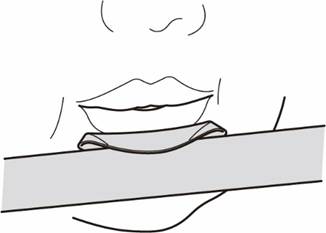
Breathe out while curling your lips in a slight smile, creating an air passage in the middle of your lips. While breathing out, bring the headjoint in front of your lips and try to find a location from which you can produce sound. If no sound is produced, use both of your hands to change the angle of the headjoint inward or outward, or move it slightly from side to side.
If a hoarse sound is produced, use your right hand to block the opening on the body side of the headjoint. Doing so will make the pitch lower. In this way, it will be easier to produce sound even when your breath speed is slow.
NOTE
If you cannot find a location from which you can produce sound, try again keeping the following points in mind:
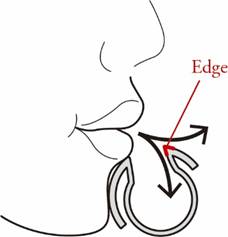
・ Make sure your breath hits the edge of the embouchure hole. A flute produces sound when the air that hits the edge of the embouchure hole is split into two streams, one going into the headjoint and the other going outside the headjoint.
・ Make sure that your lower lip covers about one third of the embouchure hole.
・ If you are not confident about the position of your mouth, try using a mirror.
Producing sound from the headjoint with the ASTFL attached
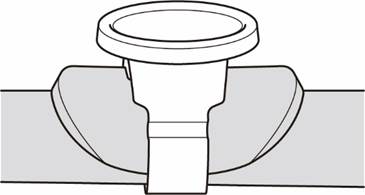
Refer to the “Attaching the ASTFL” section to attach the ASTFL. Hold the mouthpiece of the ASTFL with your lips so that your breath does not leak out, and then blow into it.
Producing sound from the headjoint without using the ASTFL
Refer to the “Removing the ASTFL” section and detach the ASTFL. Refer to the “Producing sound from the headjoint” section and again try to produce sound.
HINT In subsequent practice sessions or performances, alternately play with and without the ASTFL repeatedly. For example, attach it when you find it difficult to produce sound, and then remove it when you can produce sound consistently. |